FREE DELIVERY ON ORDERS OVER £50 IN THE UK & EU

Menu Close
Menu

FREE DELIVERY ON ORDERS OVER £50 IN THE UK & EU

What Is a Fan Speed Controller and How Does It Work?

What Is a Fan Speed Controller and How Does It Work?

Learn what a fan speed controller is, how it works, and where it is used in HVAC and industrial ventilation. Improve airflow control, reduce noise, and save energy.

Table of Contents

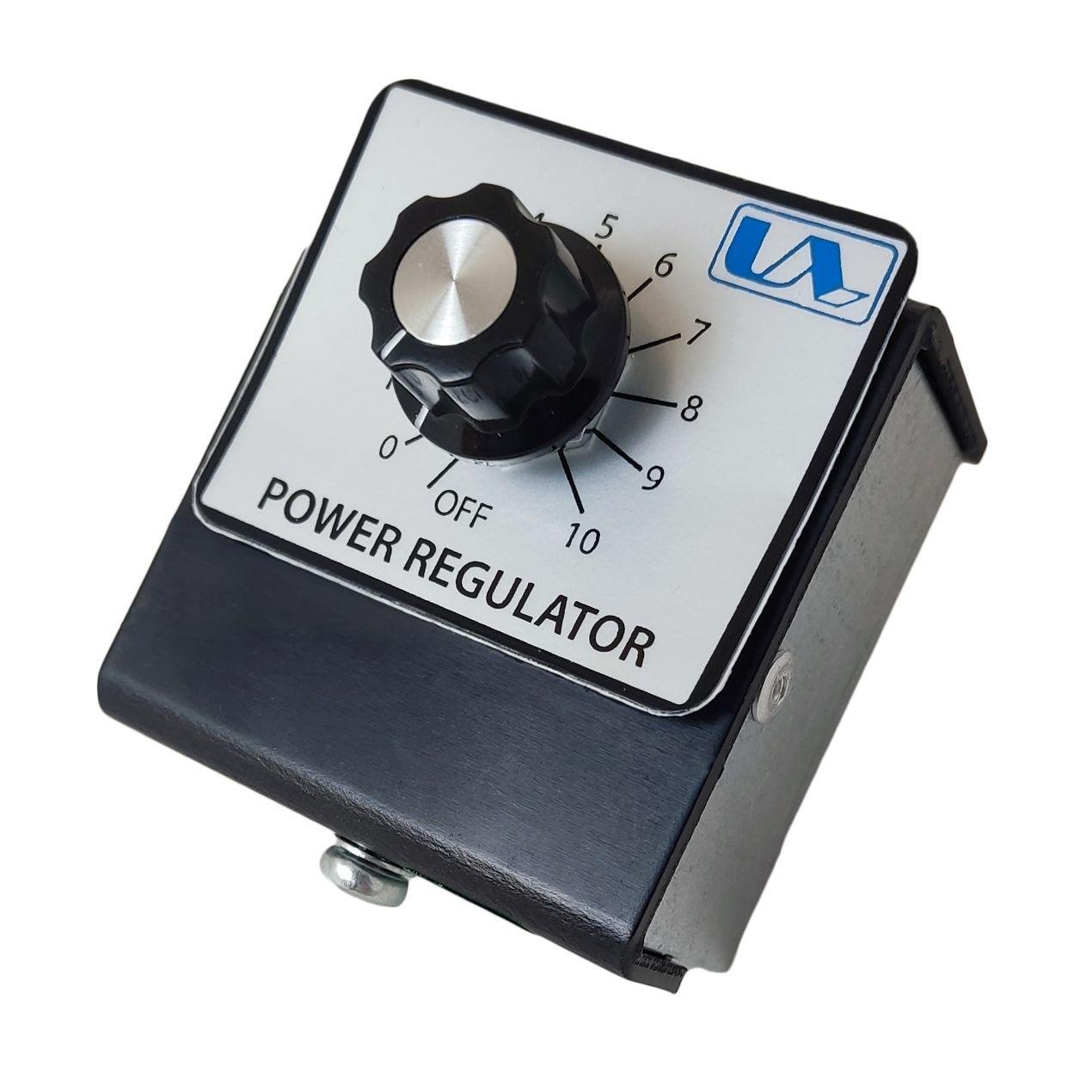
A Fan Speed Controller is an electronic device used to regulate the speed of AC fans in ventilation, HVAC, and industrial airflow systems. By adjusting the voltage supplied to the motor, it allows precise control of airflow, reduces noise, and improves energy efficiency.

Instead of running a fan continuously at full speed, a fan speed controller enables the system to match airflow to actual demand. This is particularly important in air handling units, extraction systems, commercial buildings, and industrial ventilation, where controlled airflow improves comfort, process stability, and operating costs.

For HVAC engineers and system designers, understanding how a fan speed controller works is essential for designing efficient and reliable ventilation systems.


what is a Fan Speed Controller

What Is a Fan Speed Controller?

A Fan Speed Controller regulates the electrical power delivered to a fan motor, allowing the fan to run at variable speeds rather than simple on/off operation.

Key characteristics:

  • Designed for single-phase AC fan motors
  • Smooth and adjustable airflow control
  • Reduced electrical and mechanical stress on motors
  • Compact, panel or DIN-rail mounting for easy integration

These controllers are widely used in:

  • HVAC systems
  • Ventilation and extraction fans
  • Air handling units (AHUs)
  • Commercial kitchens
  • Warehouses and large buildings

How Does a Fan Speed Controller Work?

Most AC fan speed controllers operate using phase angle control with a triac or thyristor device.

Phase Angle Control Explained

  • The controller adjusts the point in the AC waveform where voltage is applied to the motor
  • By reducing the effective voltage, the motor runs at a lower speed
  • This provides smooth and continuous speed adjustment

Because the motor receives only the voltage it needs, the fan consumes less energy and produces less noise while maintaining adequate airflow.

Why This Matters for Ventilation

Ventilation demand is rarely constant. A fan speed controller allows airflow to be increased or decreased depending on:

  • Temperature
  • Occupancy levels
  • Air quality requirements
  • Process ventilation needs

This results in more efficient HVAC fan speed regulation and improved environmental control.


Key Benefits of Using a Fan Speed Controller

1. Energy Efficiency

Running fans at full speed wastes electricity. Reducing speed even slightly can significantly cut energy consumption.

2. Noise Reduction

Lower fan speeds reduce mechanical noise, which is essential in offices, schools, hospitals, and commercial buildings.

3. Improved Airflow Control

Precise speed adjustment allows accurate control of airflow in ventilation and extraction systems.

4. Extended Motor Lifespan

Smooth voltage control reduces stress on fan motors, extending equipment life and reducing maintenance.


Common Applications

Fan speed controllers are used in a wide range of HVAC and industrial environments:

Air Handling Units (AHUs)

Control supply and extract fans to maintain balanced airflow.

Commercial Kitchens

Adjust extraction rates depending on cooking activity.

Warehouses and Large Buildings

Maintain ventilation efficiently without running fans at maximum speed.

Industrial Ventilation

Provide controlled airflow for cooling, drying, or fume extraction.

Greenhouses and Agricultural Ventilation

Regulate airflow to maintain optimal growing conditions.


Technical Comparison: Fan Speed Control vs On/Off Control

Control MethodEnergy UseNoise LevelAirflow ControlMotor Wear
On/Off SwitchingHighHighPoorHigh
Damper ControlMediumMediumLimitedMedium
Fan Speed ControllerLowLowExcellentLow

This shows why electronic fan speed control is preferred in modern HVAC design.


Related Power Control Technologies

Fan speed controllers are often installed alongside other control devices to create efficient building systems:

Together, these technologies enable energy-efficient, reliable HVAC and ventilation systems.


FAQ – Fan Speed Controller

What does a fan speed controller do?

It adjusts the voltage supplied to a fan motor, allowing variable speed control instead of simple on/off operation.

Do fan speed controllers save electricity?

Yes. Reducing fan speed lowers power consumption significantly, improving overall energy efficiency.

Are fan speed controllers suitable for all fan motors?

They are typically designed for single-phase AC fan motors used in HVAC and ventilation systems.

Why not use dampers instead of speed control?

Dampers restrict airflow but do not reduce motor speed, meaning the fan still consumes full power. A fan speed controller reduces both airflow and energy use.


Conclusion

A Fan Speed Controller is an essential component in modern HVAC and ventilation design. By enabling precise airflow control, reducing noise, and lowering energy consumption, it improves both system performance and operating efficiency.

For engineers designing ventilation, extraction, or air handling systems, integrating a reliable fan speed controller ensures better environmental control, longer motor life, and reduced energy costs.

Explore fan speed control solutions from United Automation to optimise your HVAC and ventilation systems.

Connect With Us

Table of Contents

Share this article

You might like

Optimise your venue for the 4th May peak. Discover commercial outdoor heaters and infrared heaters from United Automation that slash energy costs.
advanced power semiconductor devices
Advanced power semiconductor devices improve defence and aerospace power systems using SiC MOSFETs, IGBTs and diodes for reliability.
Industrial power control solutions and Artemis II Orion spacecraft.
Discover how power control solutions developed for the Artemis II mission relate to United Automation’s industrial thyristor controllers.
Optimise your venue for the 4th May peak. Discover commercial outdoor heaters and infrared heaters from United Automation that slash energy costs.
advanced power semiconductor devices
Advanced power semiconductor devices improve defence and aerospace power systems using SiC MOSFETs, IGBTs and diodes for reliability.

Recently Viewed Items

Need a Standard Product or a Bespoke Control System?

Whether you need our proven standard products or a custom control system, United Automation delivers robust and reliable engineering solutions tailored to your industry.

Get in Touch